log
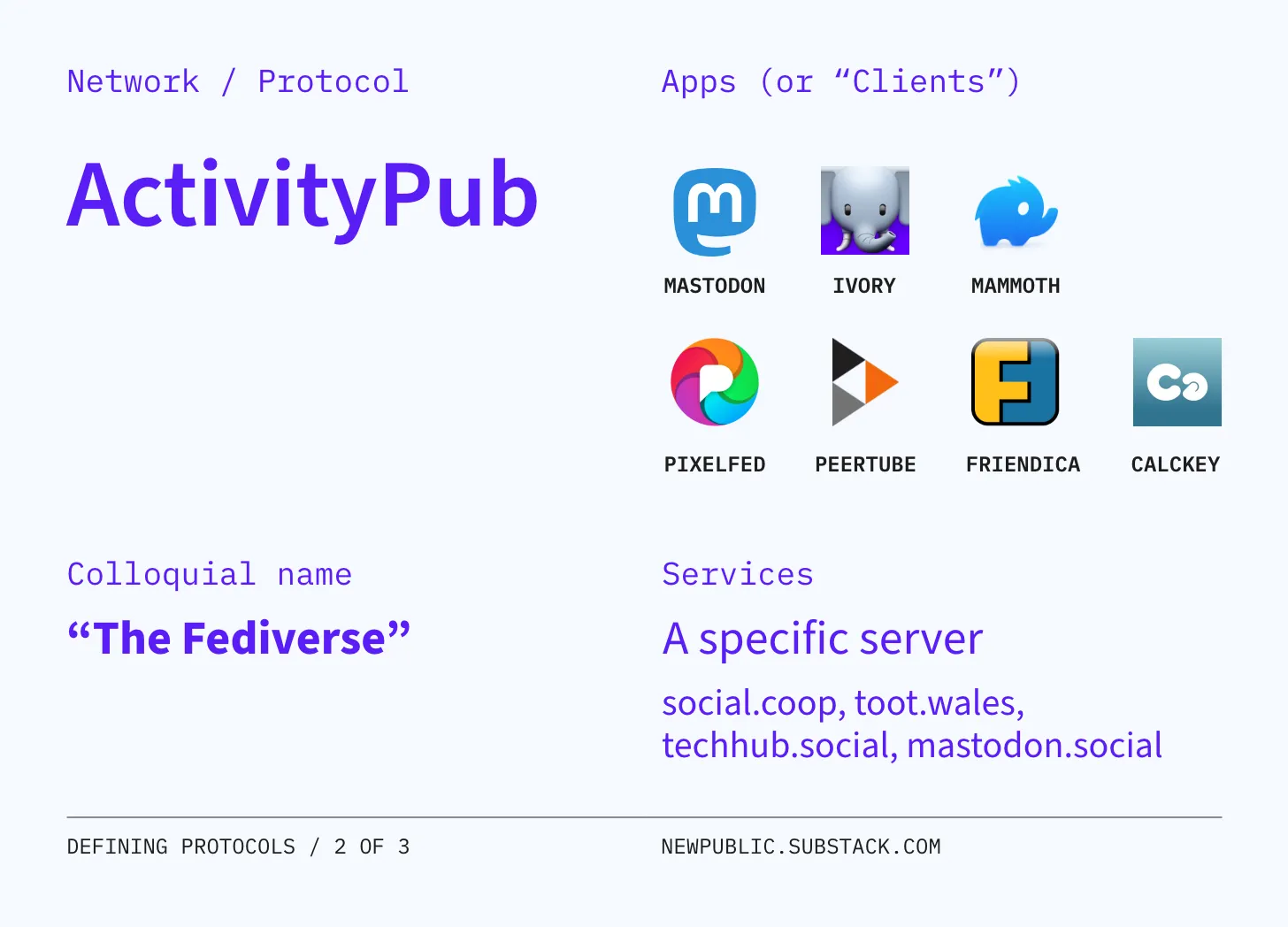
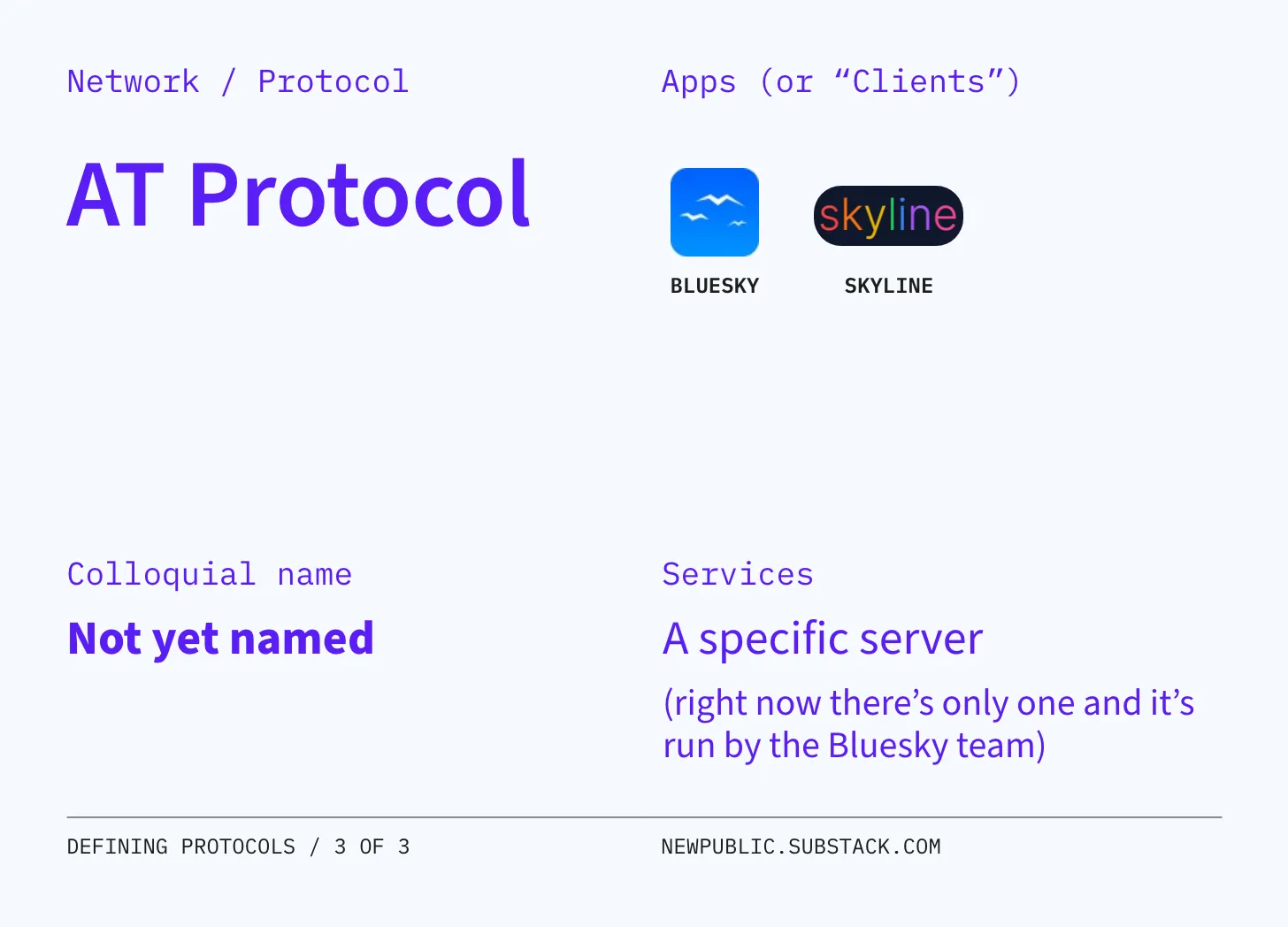
- 2023-05-16: reading about the new social protocols from New_Public: https://newpublic.substack.com/p/the-summer-of-decentralized-social
Social Protocols
Email Protocols
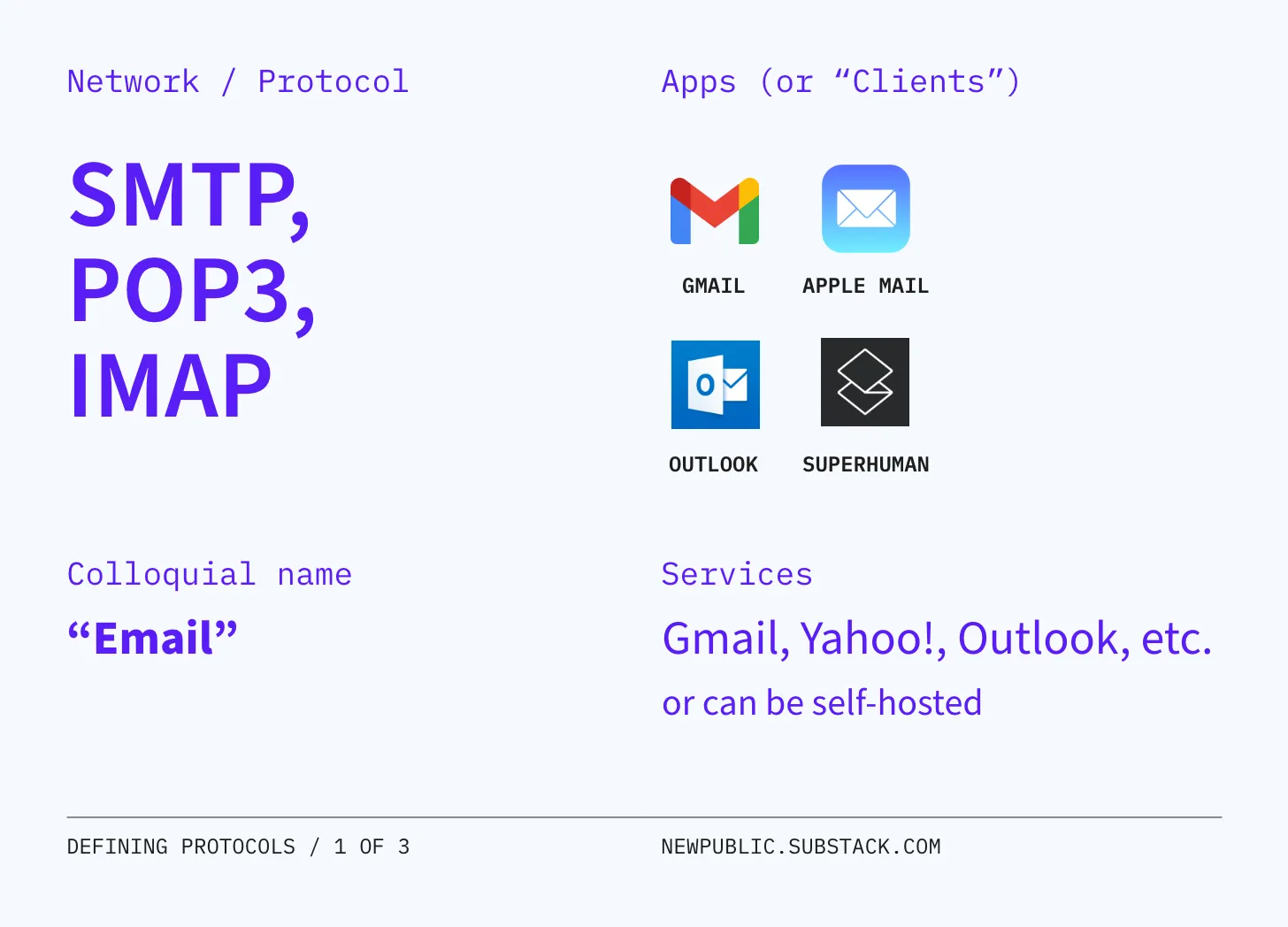
https://www.iplocation.net/email-protocols
POP3 Post Office 3 Protocol. Used to retrieve emails (reach out to mail server and bring back the contents). has separate ports for encrypted and non-encrypted content
With POP3, users can configure the server settings. This can be used to allow mail copies to be left on the server or move all emails without leaving any copy on the server.
IMAP “Internet Message Access Protocol” also used to retrieve emails but they are held by the Internet server.
Unlike POP, this does not move the emails. The biggest difference between POP3 and IMAP is the mail sync-up. POP3 assumes that a user will be connected to a single device. However, IMAP is suitable for different devices simultaneously.
requires consistent internet connection.
SMTP “Simple Mail Transfer Protocol”
- used to send emails, cannot be used for mail receiving
- does not require authentication
Internet Protocols
See internet protocols for all the internet ones
list of protocols form the summer of protocols study: https://efdn.notion.site/51db55abfc49409181b5f6f26b544d41?v=55e4574e6482468f83e29bae62e79b29
Soft protocols
 small-p, soft protocols are what govern our world. These are the unspoken rules, the thins that are so embedded as part of normal behavior that you don’t have to speak to them at all. It reflects my article on play where I don’t want play to even need to be a word in our language because it’s so embedded into our fundamental human consciousness.
What does it look like to empower people to seed these and give them paths to natural flourishing? What makes a good small-p protocol? It’s counterintuitive but for a protocol, the goal is to turn it from a Protocol to a protocol in order for it to become invisible
found objects / garbage protocol