from Lao Tzu, translated by ursula le guin
Foreword
The Tao Te Ching is partly in prose, partly in verse; but as we define poetry now, not by rhyme and meter but as a patterned intensity of language, the whole thing is poetry. I wanted to catch that poetry, its terse, strange beauty. Most translations have caught meanings in their net, but prosily, letting the beauty slip through. And in poetry, beauty is no ornament; it is the meaning. It is the truth. We have that on good authority.#permanent#quote poetry is a patterned intensity of language
Notes
Main theme is around “not doing” as the way to actually get things done, the art of letting things happen the right way. It’s almost like a spiritual analog to the political ideology of anarchism. Le Guin says that anarchists can’t be pessimists, because they are relying on the goodness of people to act in the right way (or maybe the rationalism or incentives or whatever set of environment and circumstances that lead them to behave that way). There is a certain privilege in being able to think this way. Sometimes you can’t afford to do by not doing or wait for the right timing or preserve the uncut wood. Sometimes you have to bluster forward to forge the path and make the noise and demand change?
The not doing piece resonates with me in the observation that wise people do all easy things (the wise soul / by treating the easy as hard / doesn’t find anything hard) and how softness beats hardness. This makes me think about how everything everywhere all at once was filmed in such a small time by such a small crew under such a small budget. Greatness is forged in some set of scarce circumstances, not scarce to the point where you can’t do anything, but there’s some function in not being able to do whatever you want. Operating within reasonable constraints is useful. That’s why deadlines are so useful too.
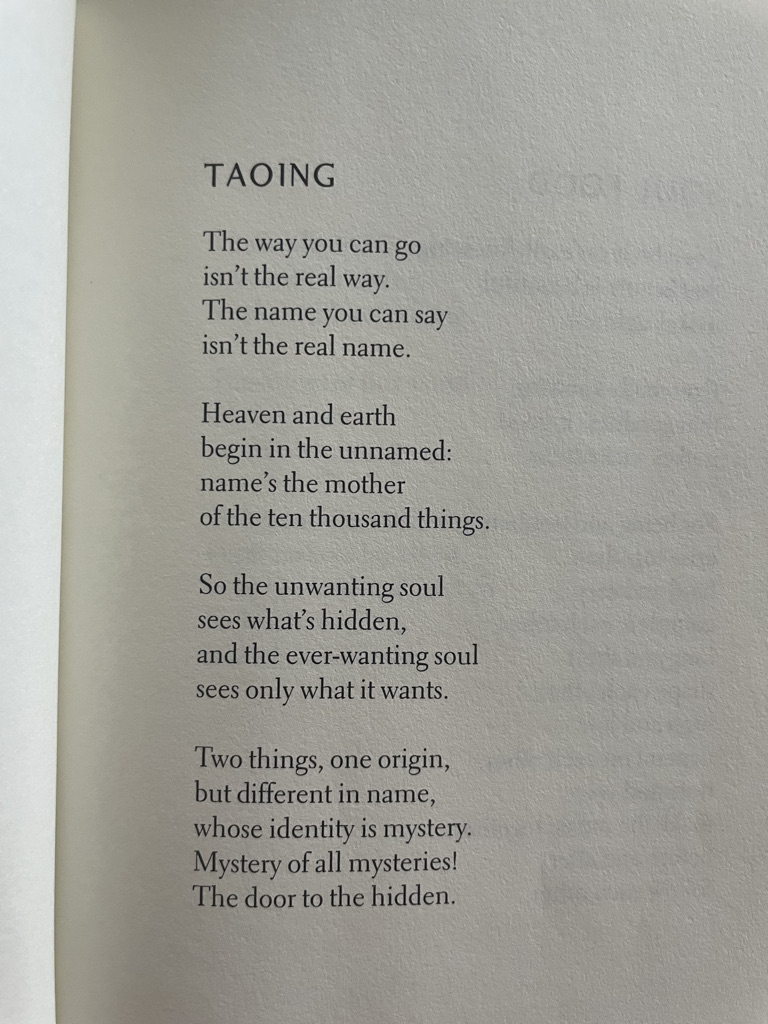
Taoing
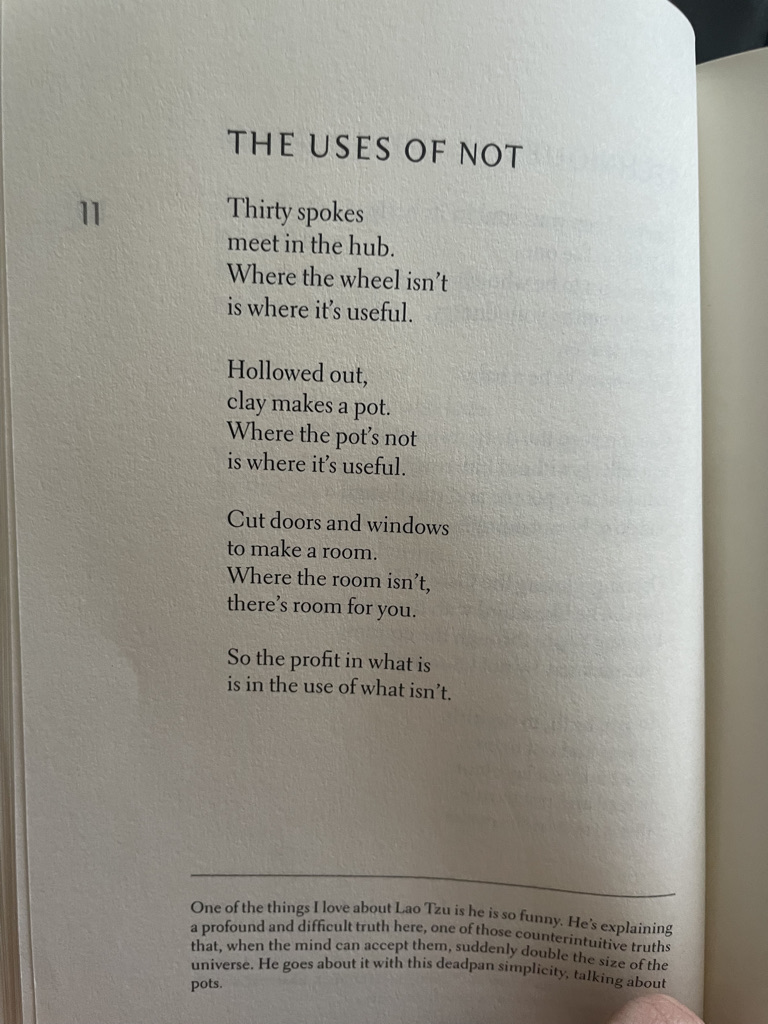
The Uses of Not
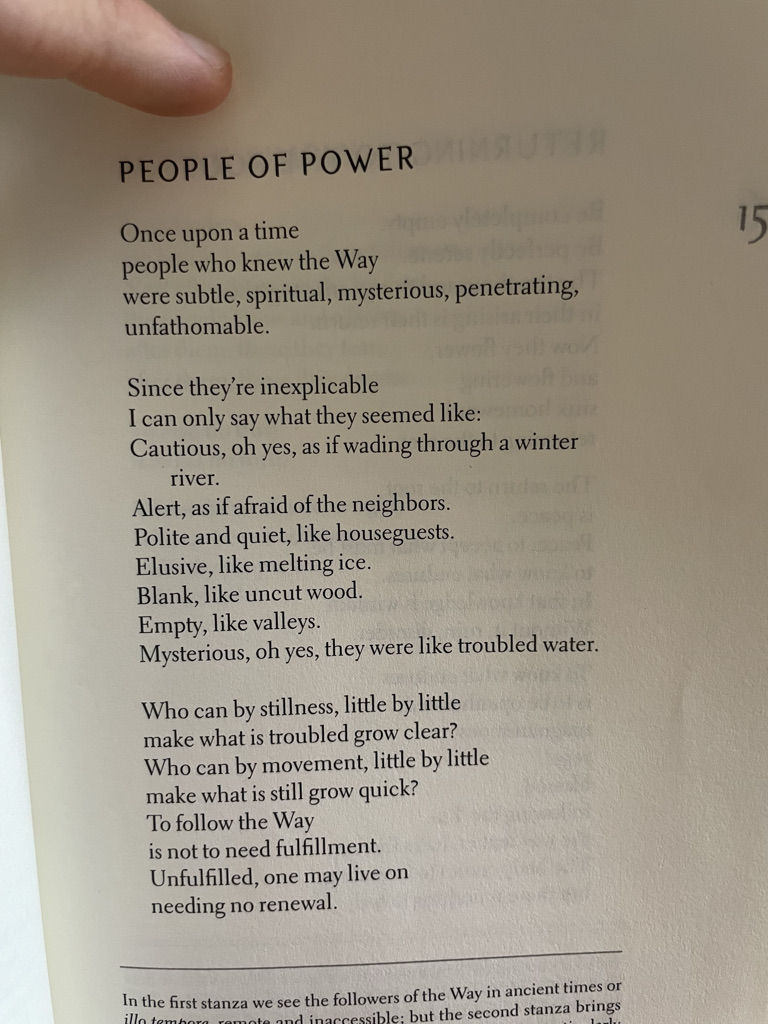
People of Power