Author: Mary Ruefle
notes
“I don’t think I really have anything to say about poetry other than remarking that it is a wandering little drift of unidentified sound, and trying to say more reminds me of following the sound of a thrush into the woods on a summer’s eve – if you persist in following the thrush it will only recede deeper and deeper
beginnings
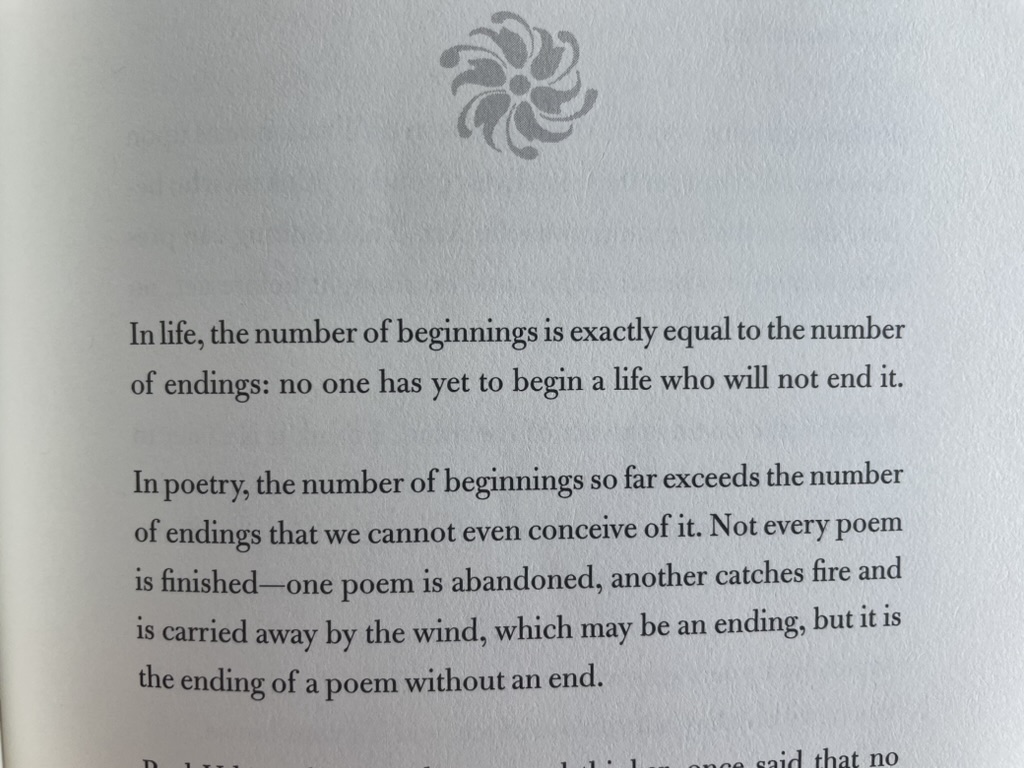
Everyone knows that if you query poets about how their poems begin, the answer is always the same: a phrase, a line, a scrap of language, a rhythm, an image, something seen, heard, witnessed, or imagined. And the lesson is always the same, and young poets recognize this to be one of the most important lessons they can learn: if you have any idea for a poem, an exact grid of intent, you are on the wrong path, a dead-end alley, at the top of a cliff you haven’t even climbed. This is a lesson that can only be learned by trial and error.
When I told Mr. Angel about the lifelong sentence, he said.
“That’s a lot of semicolons!” He is absolutely right; the sentence would be unwieldy and awkward and resemble the novel of a savant, but the next time you use a semicolon (which, by the way, is the least-used mark of punctuation in all of poetry) you should stop and be thankful that there exists this little thing, invented by a human being an Italian as a matter of fact-that allows us to go on and keep on connecting speech that for all apparent purposes is unrelated.
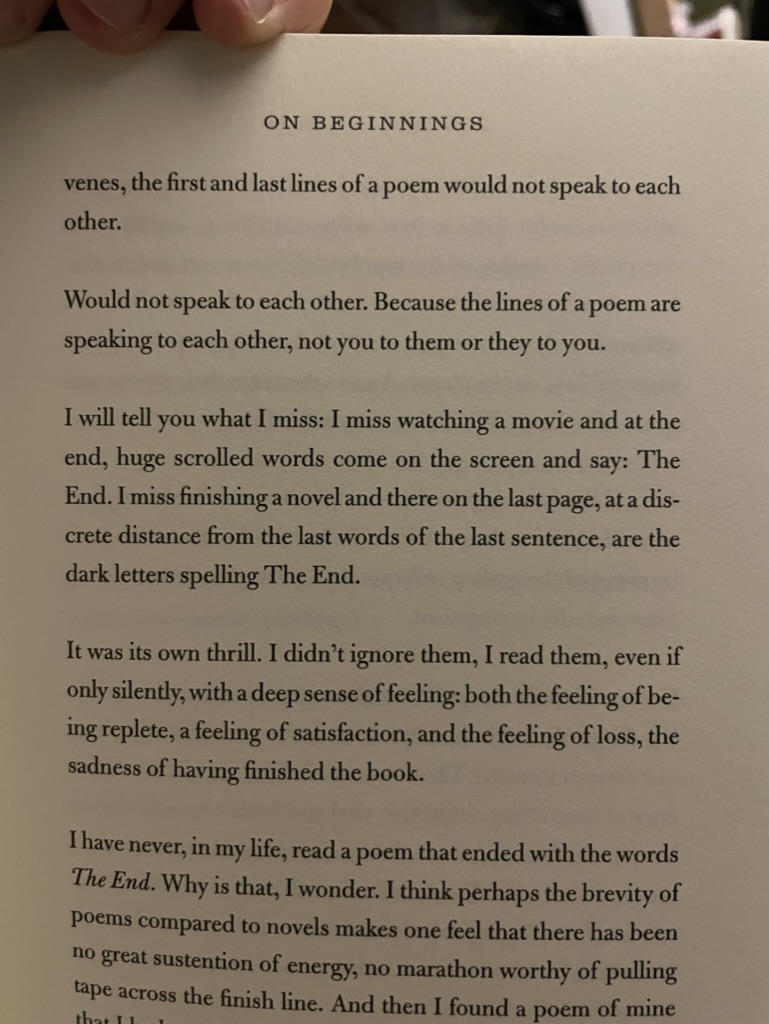
You might say a poem is a semicolon, a living semicolon, what connects the first line to the last, the act of keeping together that whose nature is to fly apart. Between the first and last lines there exists—poem—and if it were not for the poem that intervenes, the first and last lines of a poem would not speak to each other.
sentimentality
-
When the late American novelist John Gardner defined sentimentality as “causeless emotion,” he must have been thinking about kittens. But it seems to me the effect of an image in a poem often acts like a kitten: we are expected to go “ah” deep down in our interior sphere, and to slightly elevate ourselves in relation to the world, as if the soul were a beach ball.
-
I’ve been using Gardner’s definition of sentimental- -causeless emotion, that is, indulgence of more emotion than seems warranted by the stimulus -for many years in teaching students why their sentimental poems don’t work, and in explaining to myself why my own sentimental poems don’t work. Until one day I realized that causeless emotion was an even better definition of poetry. In fact it is almost a paraphrase of Baudelaire’s statement that poets possess “the ability of being vividly interested in things, even those that appear most trivial.”
-
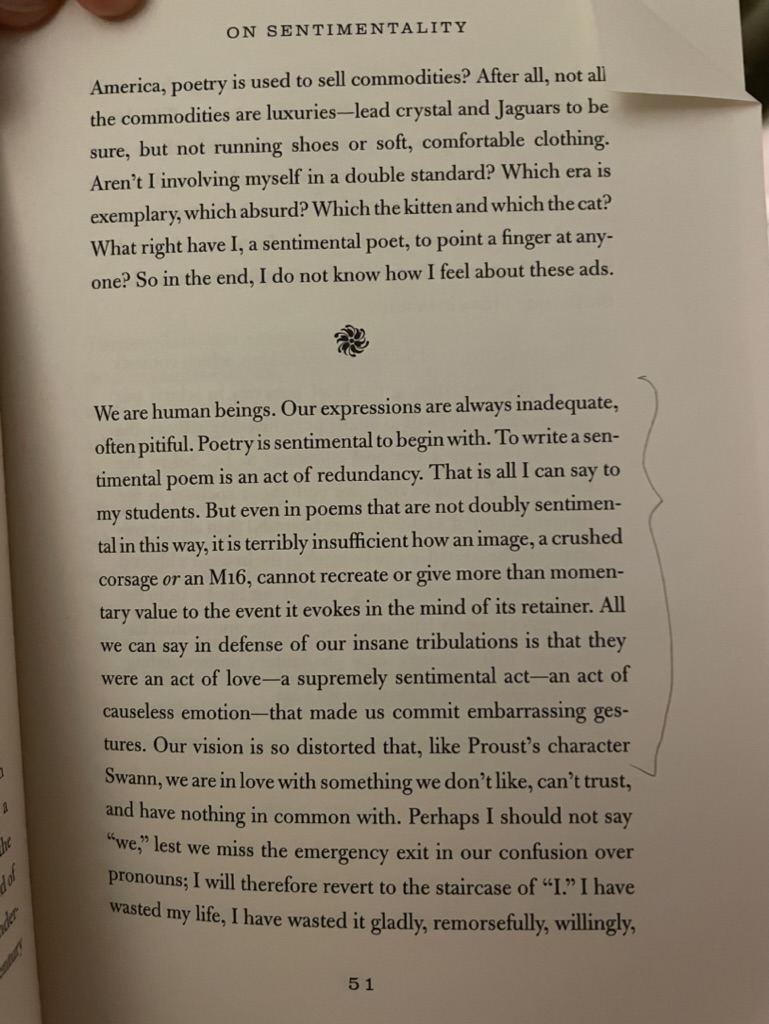
All we can say in defense of our insane tribulations is that they were an act of love-a supremely sentimental act—an act of causeless emotion-that made us commit embarrassing ges-tures.
- from Claude Levi-Strauss’s Tristes Tropiques:
The possibility, vital for life, of unhitching, which consists … in grasping, during the brief intervals in which our species can bring itself to interrupt its hive-like activity, the essence of what it was and continues to be, below the threshold of thought and over and above society; in the contemplation of a mineral more beautiful than all our cre-ations; in the scent that can be smelt at the heart of a lily and is more imbued with learning than all our books; or in the brief glance, heavy with patience, serenity and mutual for-giveness, that, through some involuntary understanding, one can sometimes exchange with a cat.
And that has been a long journey for me, of listening. I used to think I wrote because there was something I wanted to say. Then I thought, "I will continue to write because I have not yet said what I wanted to say"; but I know now I continue to write because I have not yet heard what I have been listening to.
the moon
theme
secrets
-
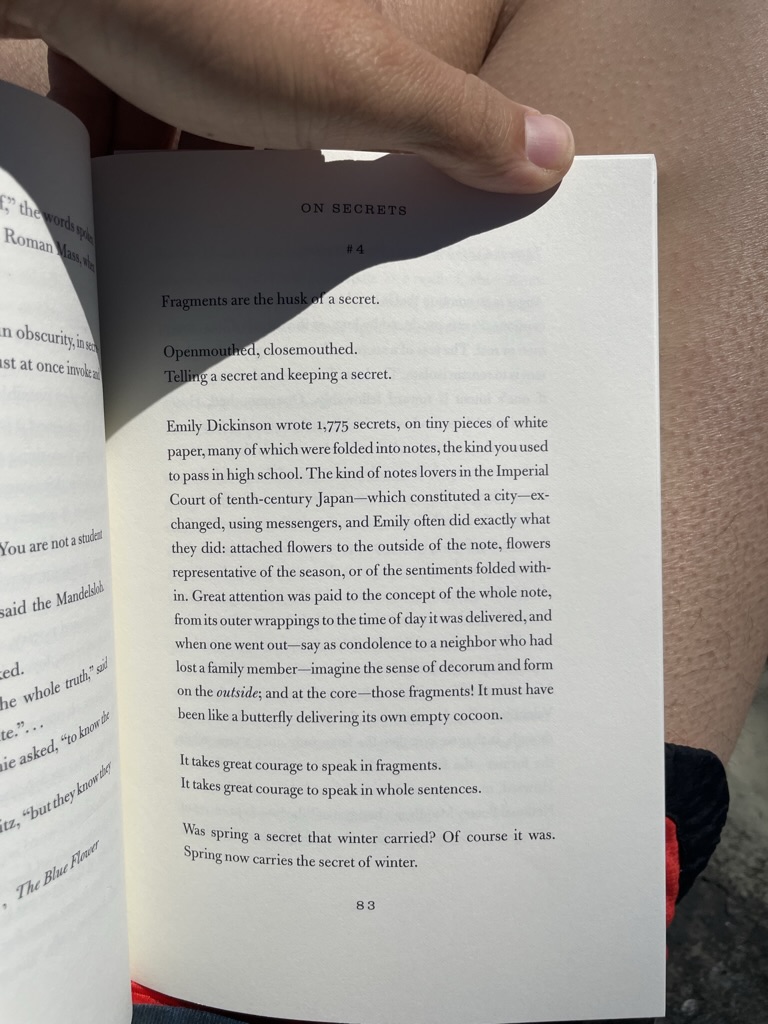
The origins of poetry are clearly rooted in obscurity, in secre-tiveness, in incantation, in spells that must at once invoke and protect, tell the secret and keep it.
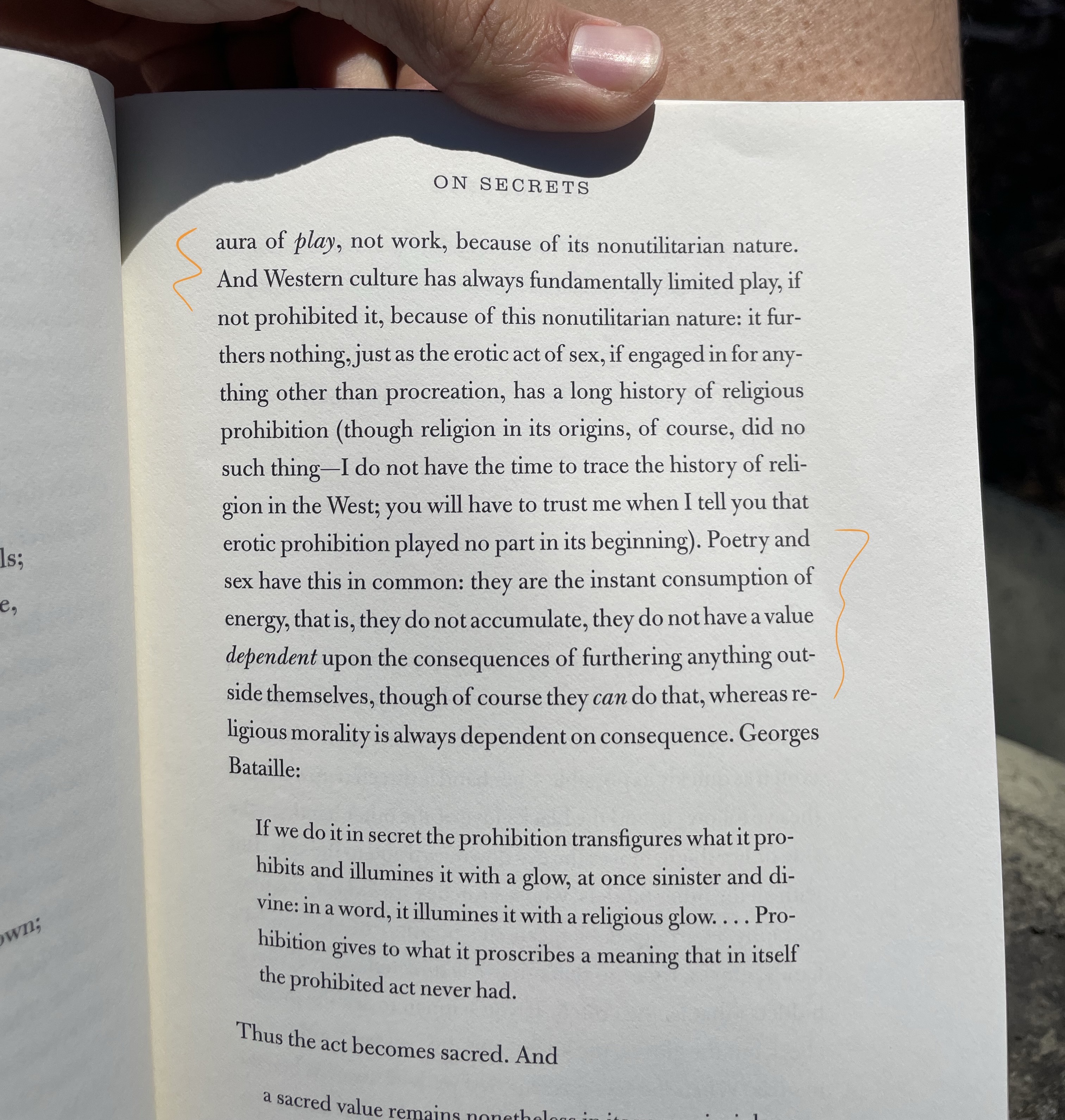
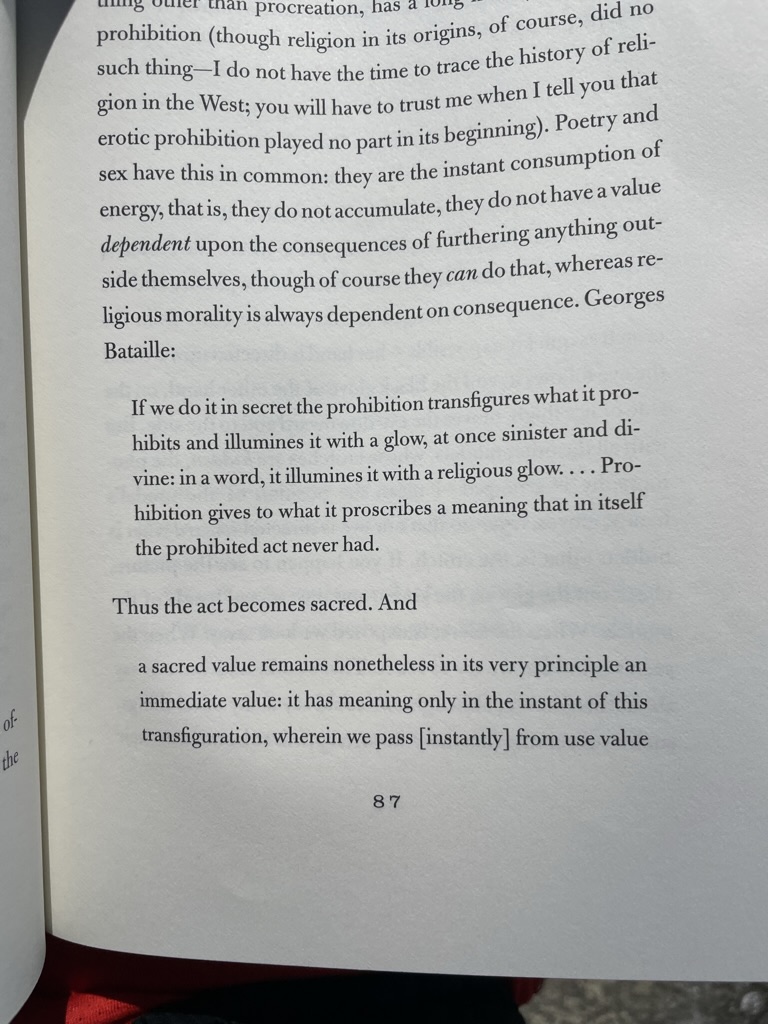
- ”==[poetry] is the instant consumption of energy, that is, they do not accumulate, they do not have a value dependent, upon the consequences of furthering anything outside themselves, though of course they can do that==”
-
A poet may know that the most eloquent word is a stone, bu he must never say that or the silence would be broken, the silence he keeps by speaking
-
The word paradox is a literary cliche, we use it and say it so lightly. It is a kind of fabric softener. “The conscious mind.. is not always either willing or able to put forth the extraordi.-nary intellectual and moral effort needed to take a paradox se-riously” Jung.#phrases
-
Colette calls a poem “that secret, that dried rose, that scar, that sin.” James Tate uses as an epigraph for one of his books a line by James Salter: “Here then, faintly discolored and liable to come apart if you touch it, is the corsage that I kept from the dance.”
-
In Hindu poetics, a poem is recognized as such by those who have a heart.” If you do not have a heart you cannot recognize a poem.
-
“man is half-open being.”
-
What beauty is is your ability to apprehend it. The ability to apprehend beauty is the human spirit
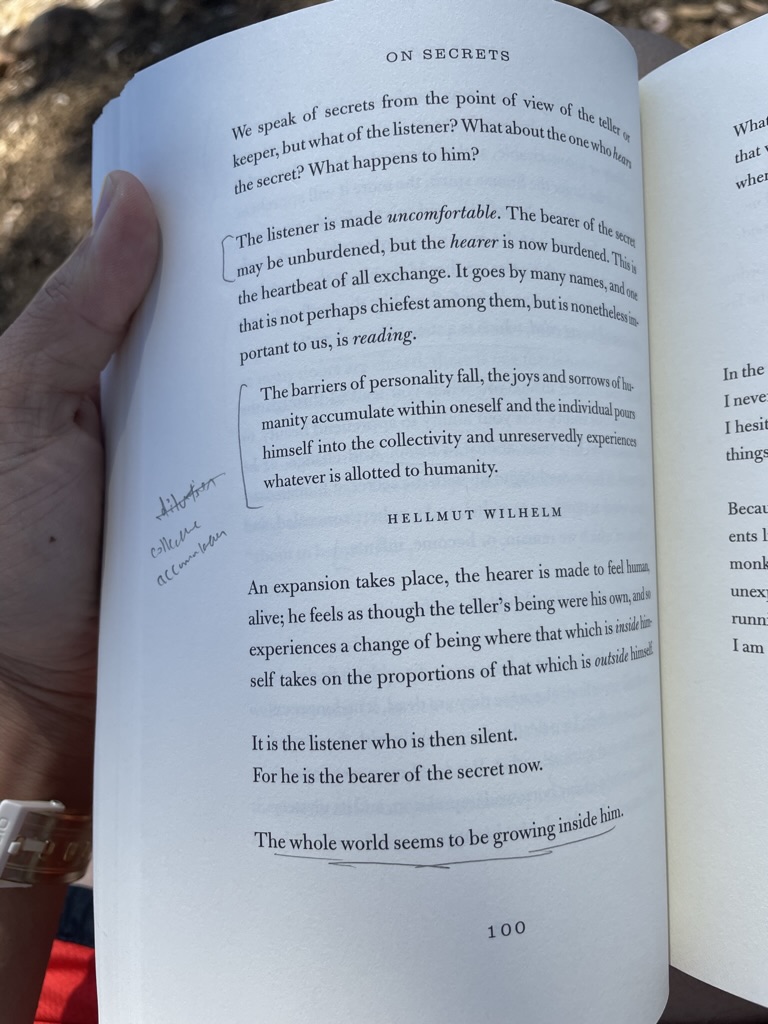
- “the whole world seems to be growing inside him”
fear
- emotions != feelings. emotions are raw, uncontrollable. feelings are the combination with intellect
- “fear is to recognize ourselves”
- “fear is desire’s dark dress, its doppelganger”
- fear causes the accidents, the failures, the errors
- which are ultimately the genius in the system. they are accidents
- fear is personal, “belongs to man, not the world.”
- simone weil: “‘I am suffering.’ It is better to say this than to say, ‘This landscape is ugly’”
- Wallace Stevens: We are “an unhappy people in a happy world”
- you might say that “fear is the poet’s procedure, that which he has been trained to concentrate on”
- negative capability: the capacity (usually of artists) to pursue ideals of beauty, perfection, etc. which ultimately leads them to intellectual confusion. Mary describes it through John Keats as “capable of being in uncertainties, Mysteries, doubts, without any irritable reaching after fact reason”
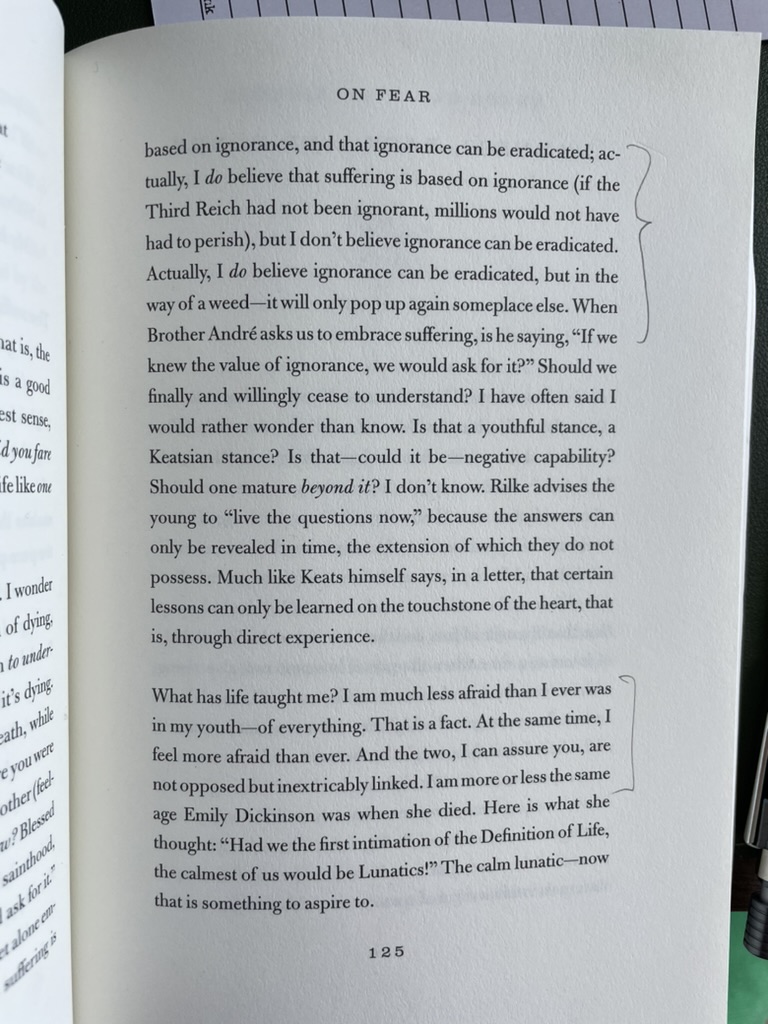
- calm lunacy
madness, rack, and honey
-
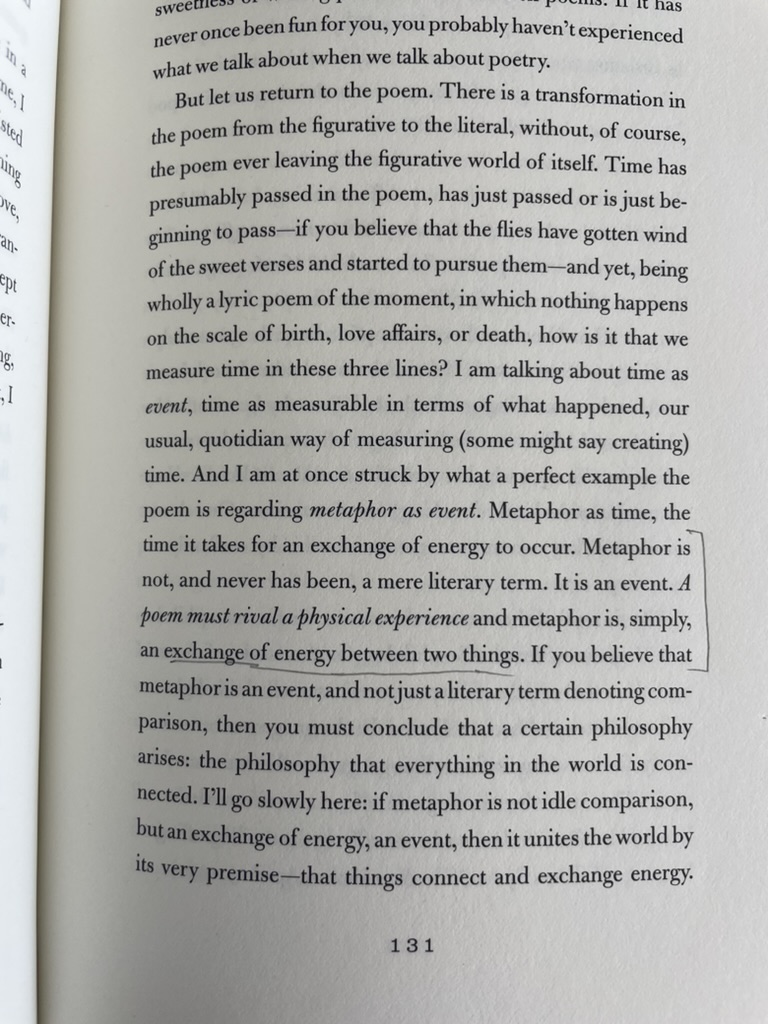
Metaphor is not, and never has been, a mere literary term. It is an event. A poem must rival a physical experience and metaphor is, simply, an exchange of energy between two things.
-
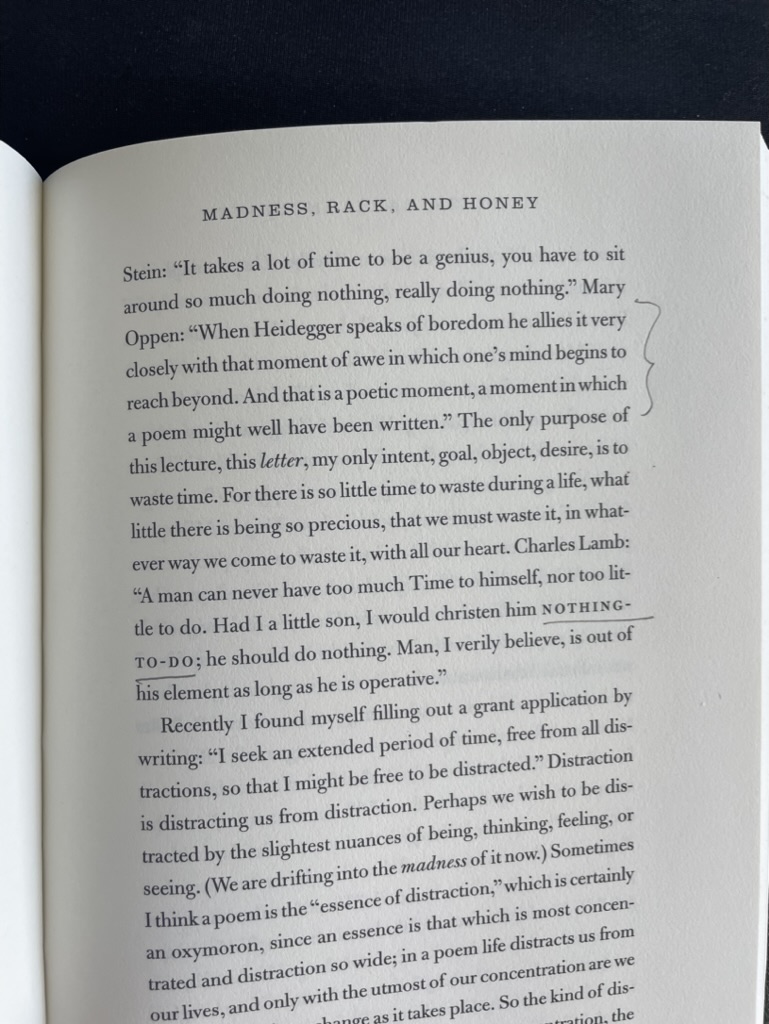
Stein: “It takes a lot of time to be a genius, you have to sit around so much doing nothing, really doing nothing.”
-
Mary Oppen: “When Heidegger speaks of boredom he allies it very closely with that moment of awe in which one's mind begins to reach beyond. And that is a poetic moment, a moment in which a poem might well have been written.”
someone reading a book
-
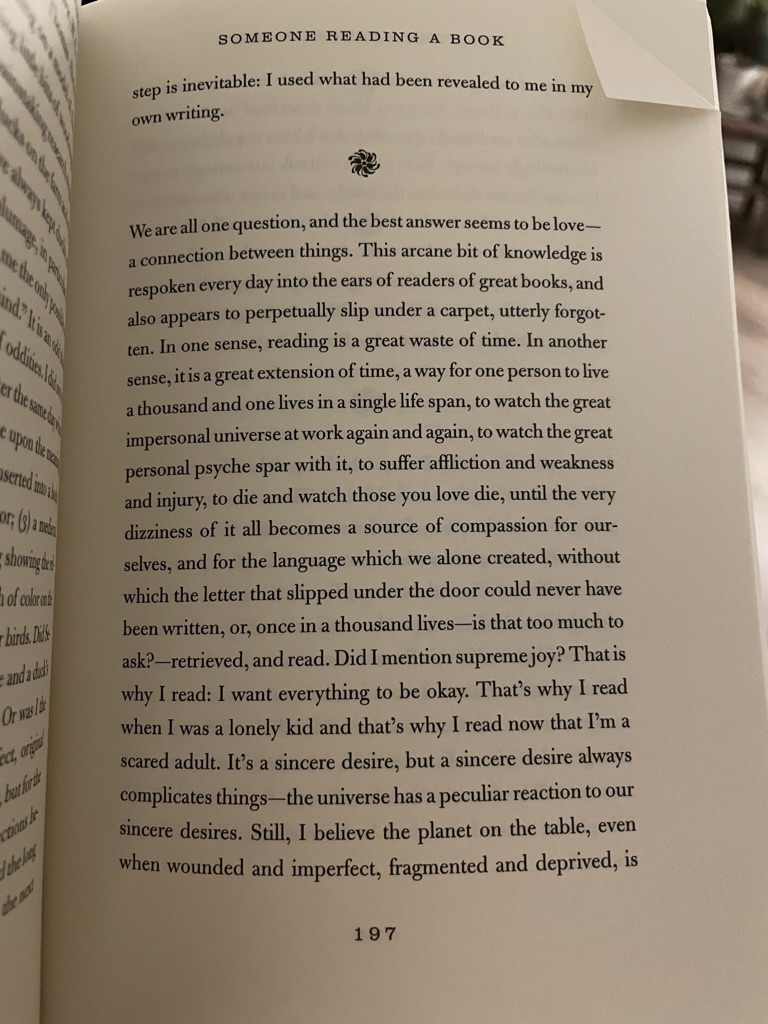
We are all one question, and the best answer seems to be love-a connection between things.
-
Did I mention supreme joy? That is why I read: I want everything to be okay. That’s why I read when I was a lonely kid and that’s why I read now that I’m a scared adult. It’s a sincere desire, but a sincere desire always complicates things—the universe has a peculiar reaction to our sincere desires.
-
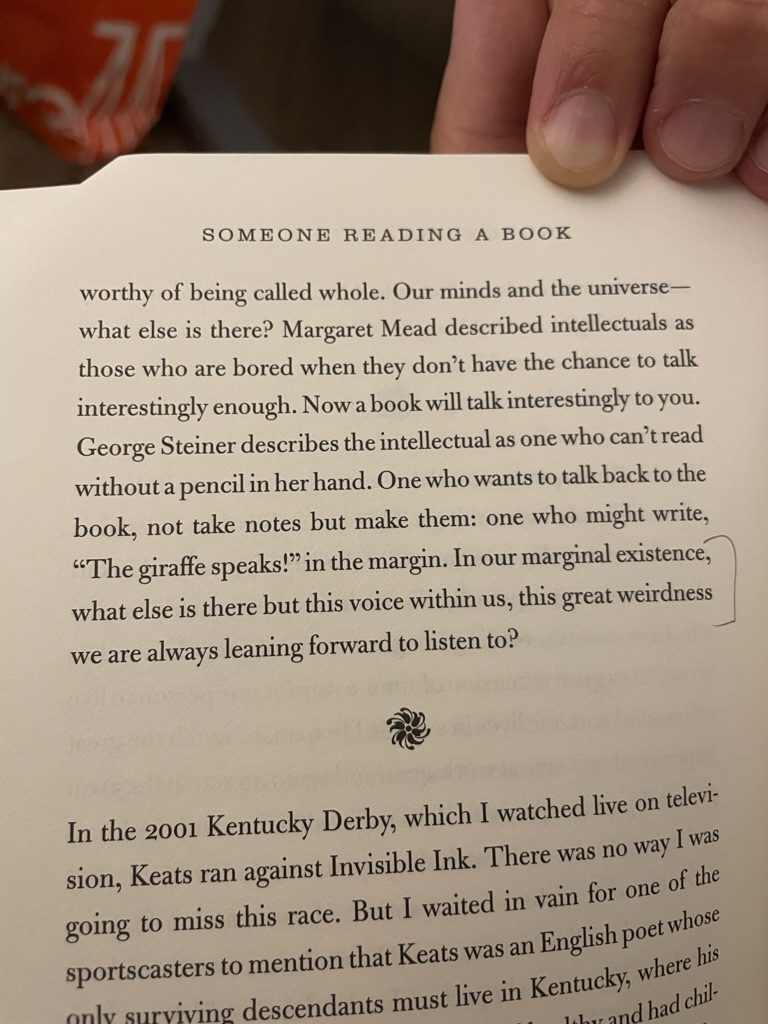
George Steiner describes the intellectual as one who can’t read without a pencil in her hand. One who wants to talk back to the book, not take notes but make them: one who might write, “The giraffe speaks!” in the margin. In our marginal existence, what else is there but this voice within us, this great weirdness we are always leaning forward to listen to?
letters
-
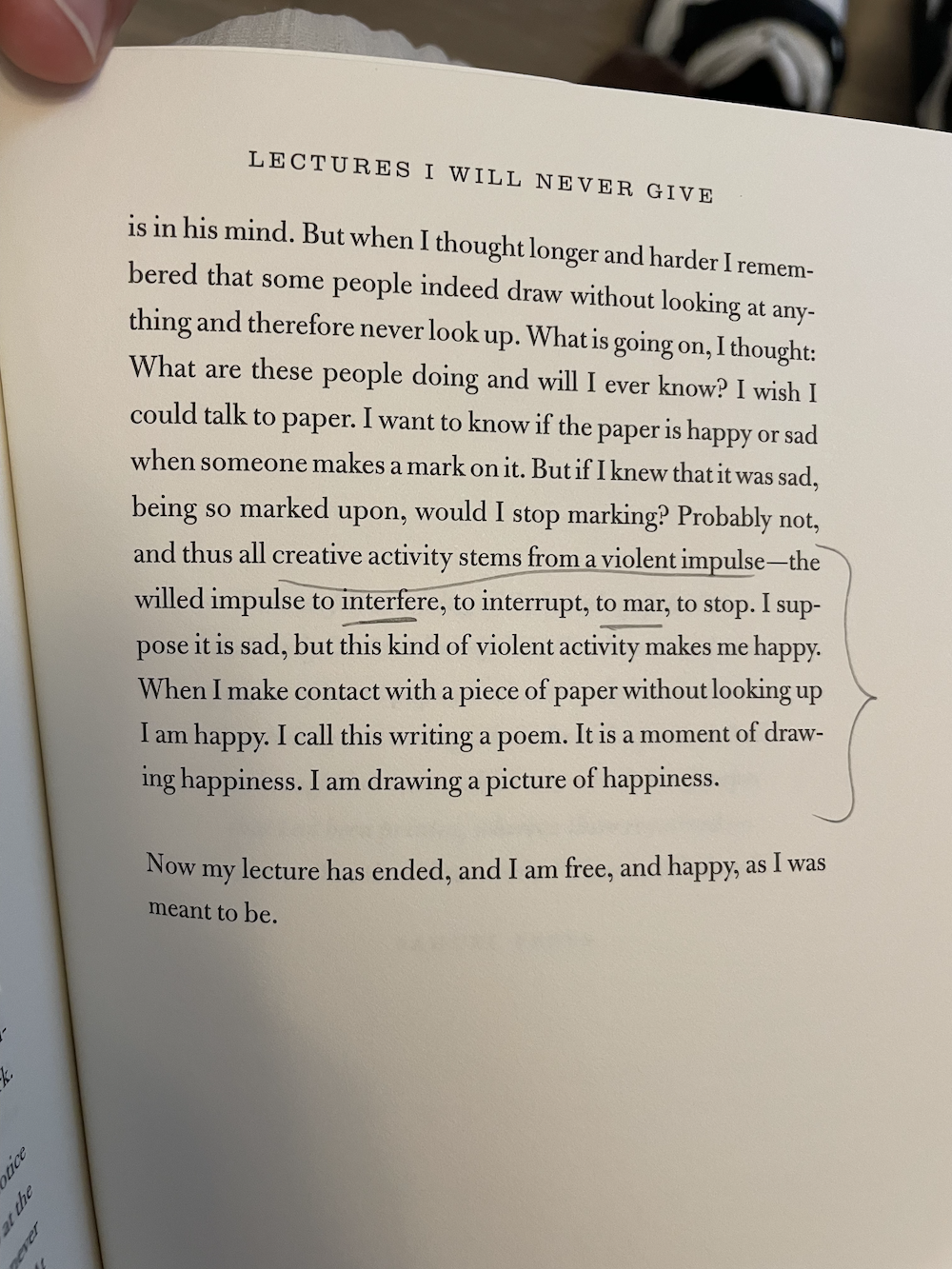
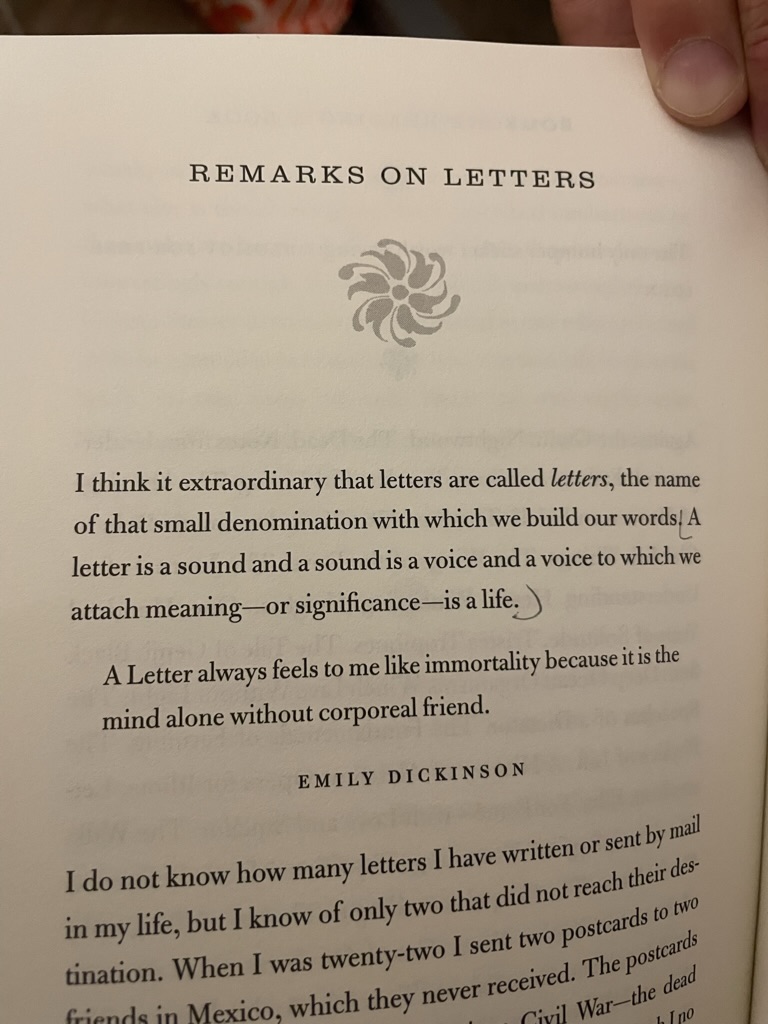
per and applied a little pressure; by bringing her hand a little ways in one direction, she left a mark upon the paper. “That’s all there is to it,” she said, “but it’s a miracle. Once there was nothing, and now there’s a mark?
-
Many will disagree, but for me, I do not care if I am writing a poem or a letter- it is just making marks on a sheet of paper that delights and envelops me. What I am trying to tell you is this: every time you write an unengaged letter, you are wasting another opportunity to be a writer.
kangaroo beach
-
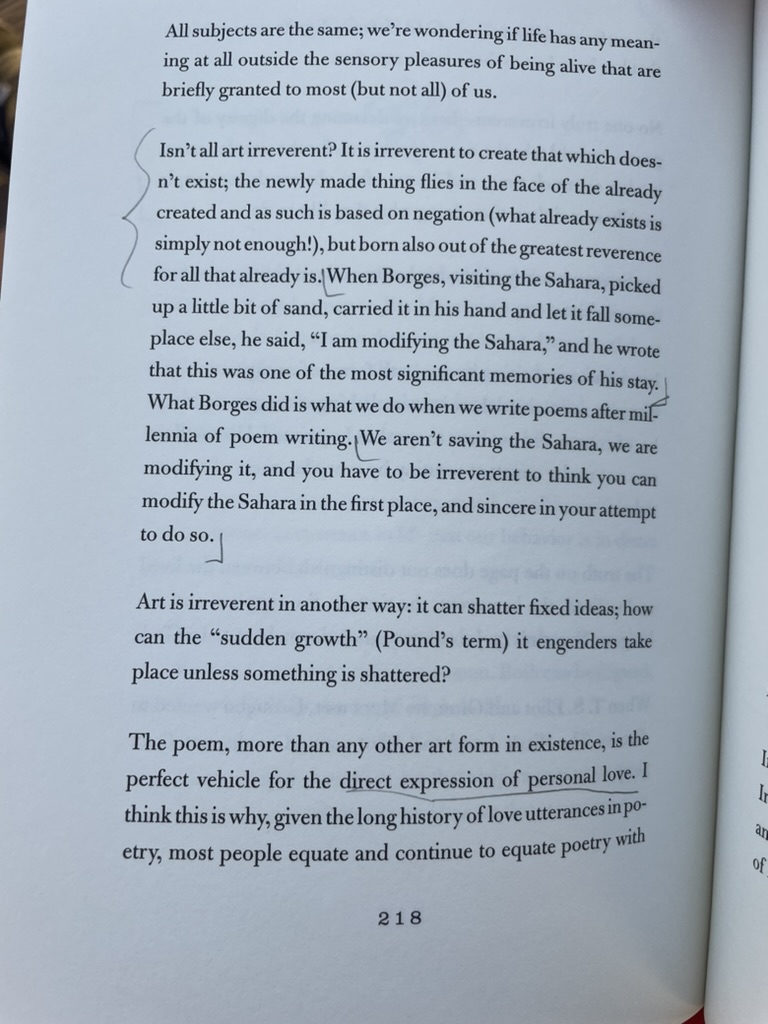
A poem is a finished work of the mind, it is not the work of a finished mind.
-
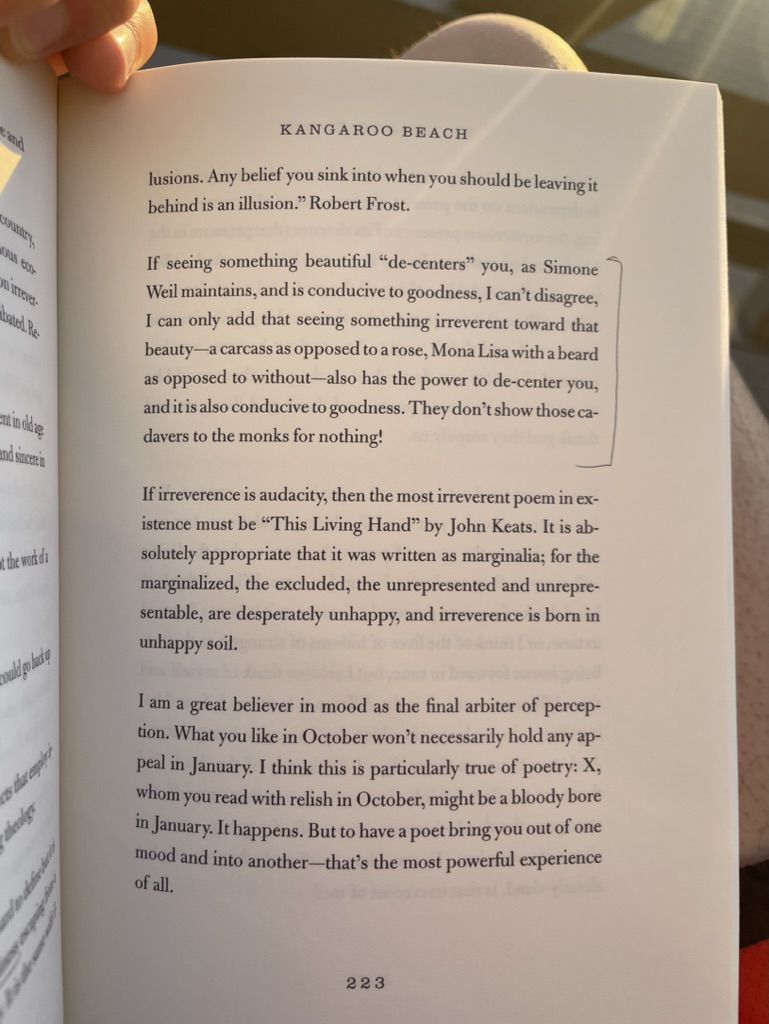
If seeing something beautiful “de-centers” you, as Simone Weil maintains, and is conducive to goodness, I can’t disagree, I can only add that seeing something irreverent toward that beauty—a carcass as opposed to a rose, Mona Lisa with a beard as opposed to without -also has the power to de-center you, and it is also conducive to goodness. They don’t show those cadavers to the monks for nothing!
lectures
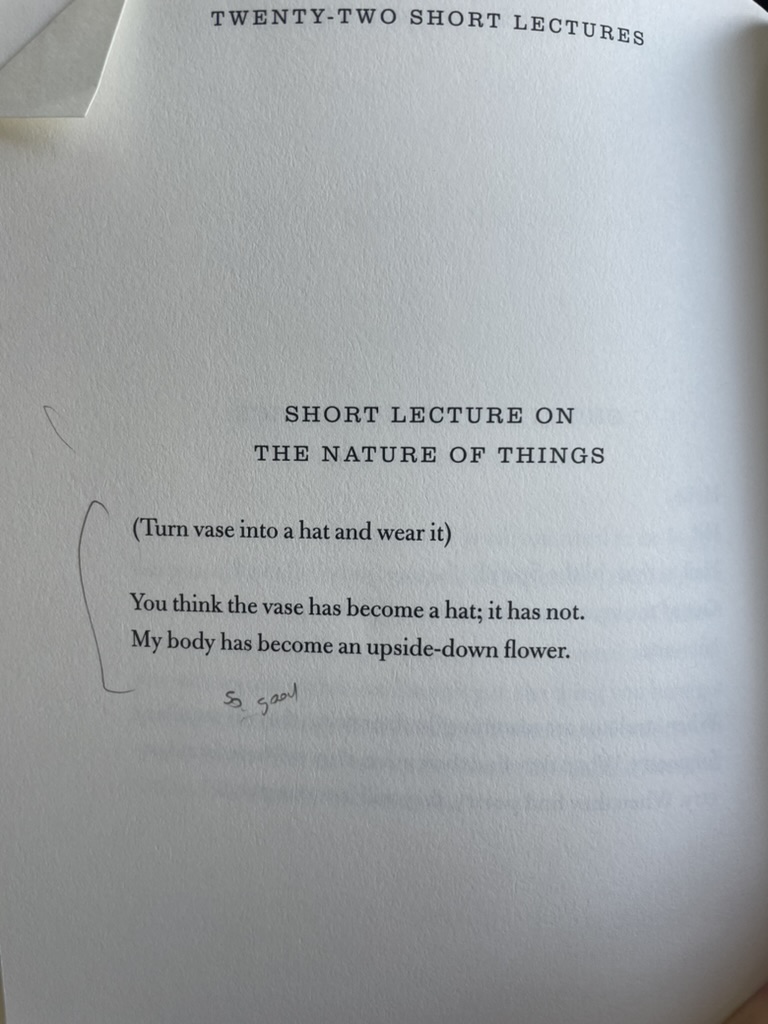 (very Grapefruit-esque)
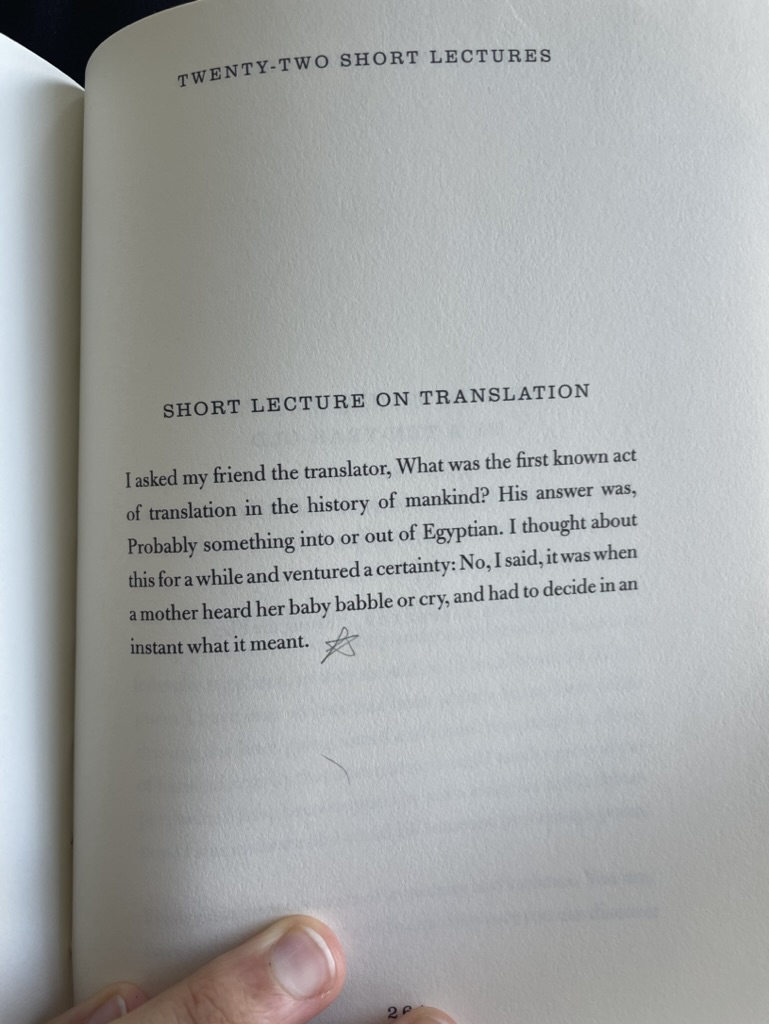
-
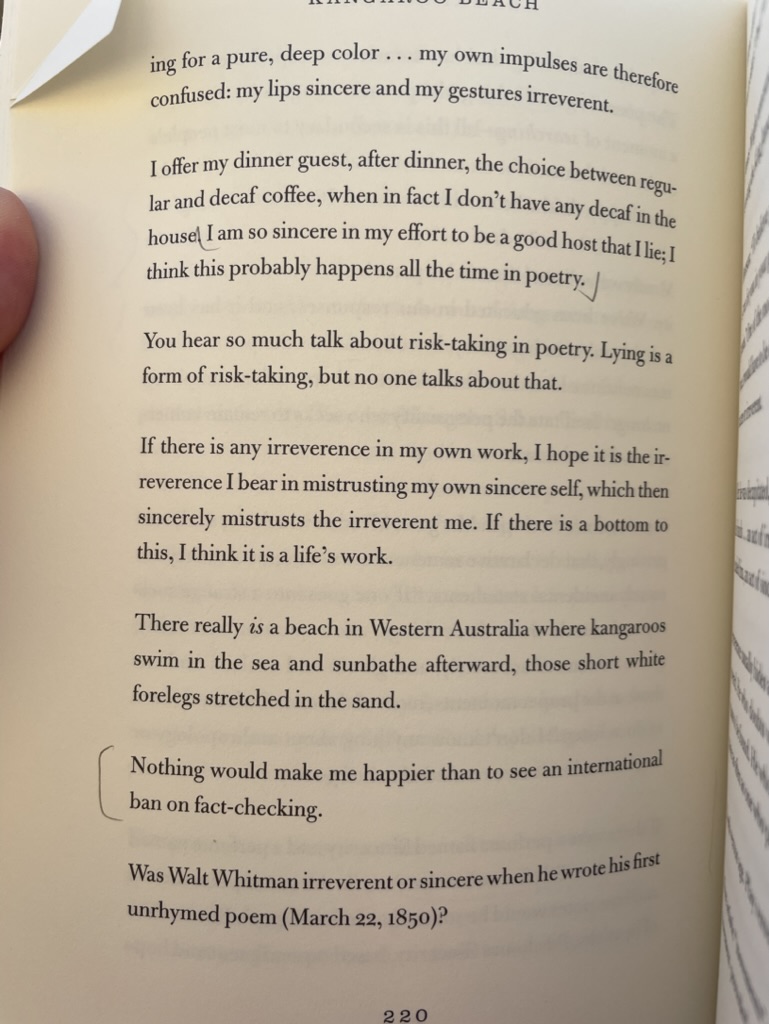
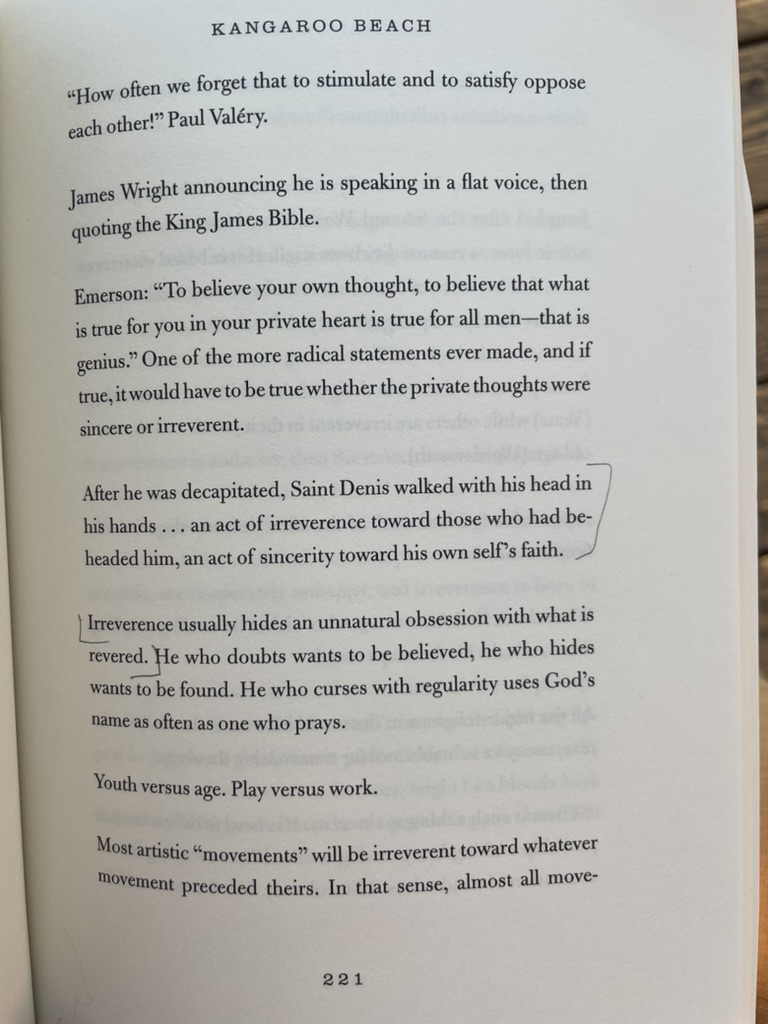
A book is a physical expansion of the human brain. It is not an object to be treated lightly. When you hold a book in your hands you are holding a piece of cerebrum in your hands, like Saint Denis himself, who walked for miles carrying his head in his two hands, after he had been beheaded.
-
I don’t think there is anything balanced about artistic ere-ation at all, I think it is a lopsided way of being, an obsessive and off-balance way of perceiving and being in the world;
-
(A craft is a boat, ship, or airplane; the most primitive craft is a {raft, whose very word is embedded in the word craft.
-
We don’t know. But surely there must have been a moment of glorious well-being when they slid their raft into the water and discovered that it could float, and would hold them all, as they set out to cut a hole in time.
-
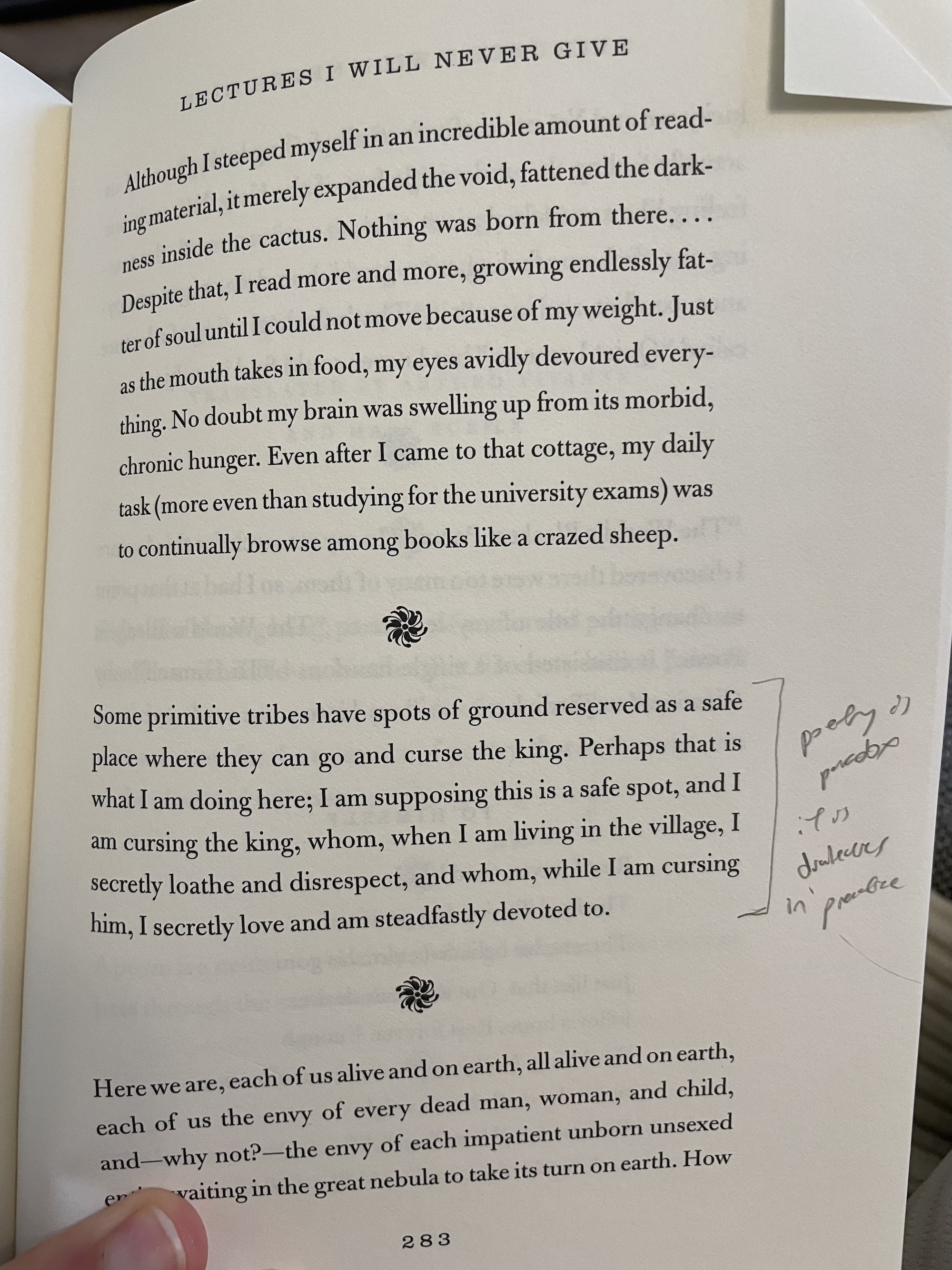
- poetry is paradox, it is dialetics in practice
-
Right after the big bang, particles of matter and particles of antimatter annihilated each other. But for every billion pairs of particles, there is one extra particle of matter. That tiny imbalance accounts for the existence of poetry, that is, the existence of the observed universe.
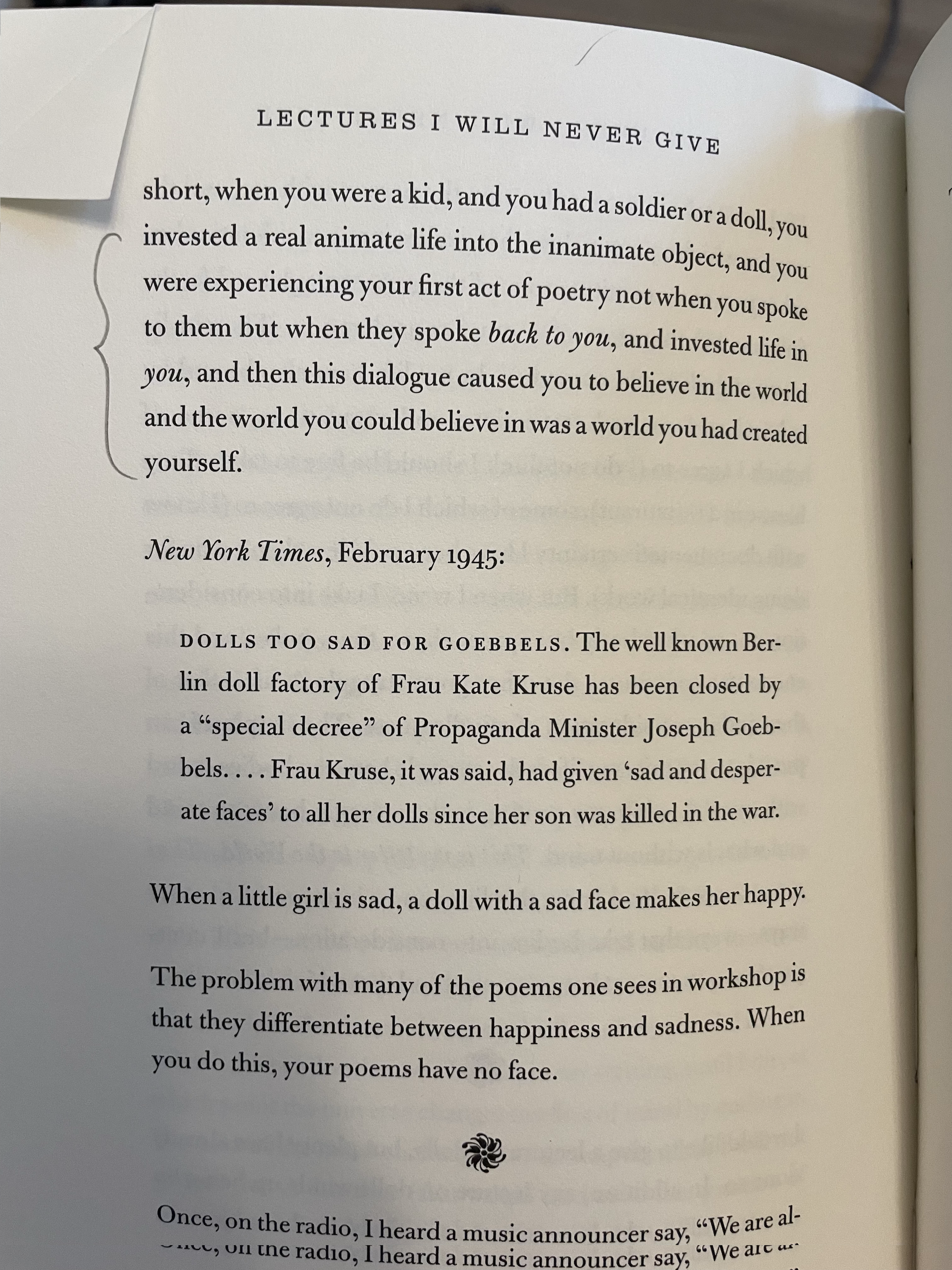
- dolls as the first act of worldmaking
-
I believe that all poets are winged, and some can fly and some cannot, and that having wings is their distinguishing feature, not whether they can fly. Some poets (can fly but they don’t have wings and they are the worse. If you are trying to fly, stop it. Just watch under your arms for signs of wings, and if they sprout, even if you can’t ever make it off the ground, say you are a turkey-well, that is an interesting thing. Of course you may be a lark, and that would be lucky. But in general pay attention to the wings, not to the sky.
-
And Samuel Beckett, in an interview: “I speak of an art turning from [the plane of the feasible] in disgust, weary of puny exploits, weary of pretending to be able, of being able, of doing a little better the same old thing, of going a little further along a dreary road.?
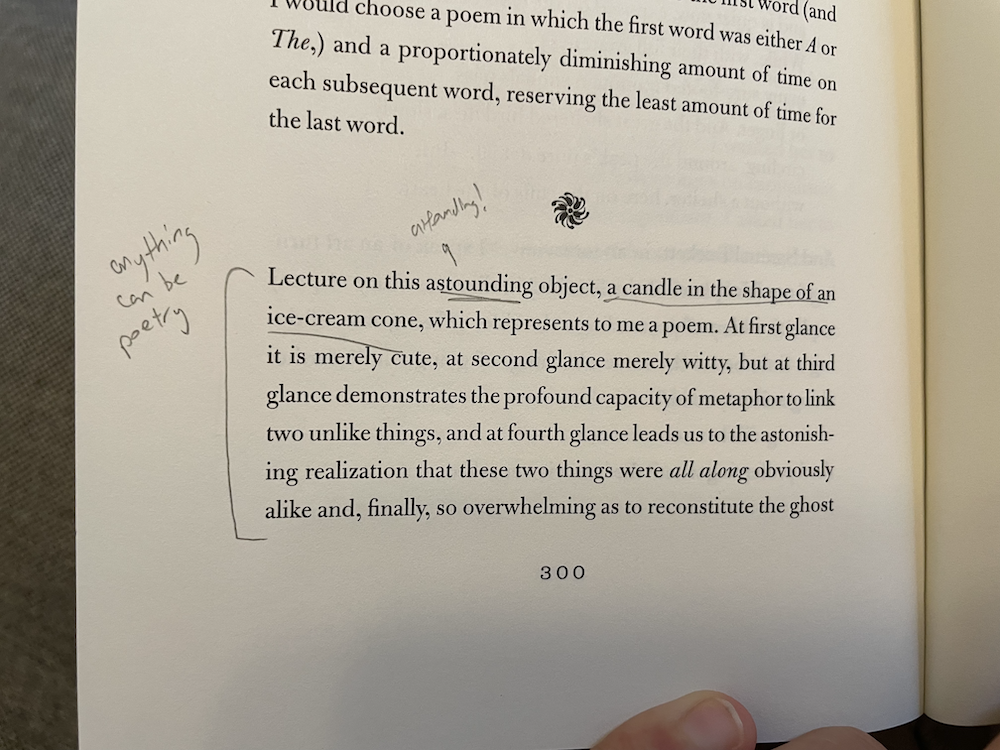
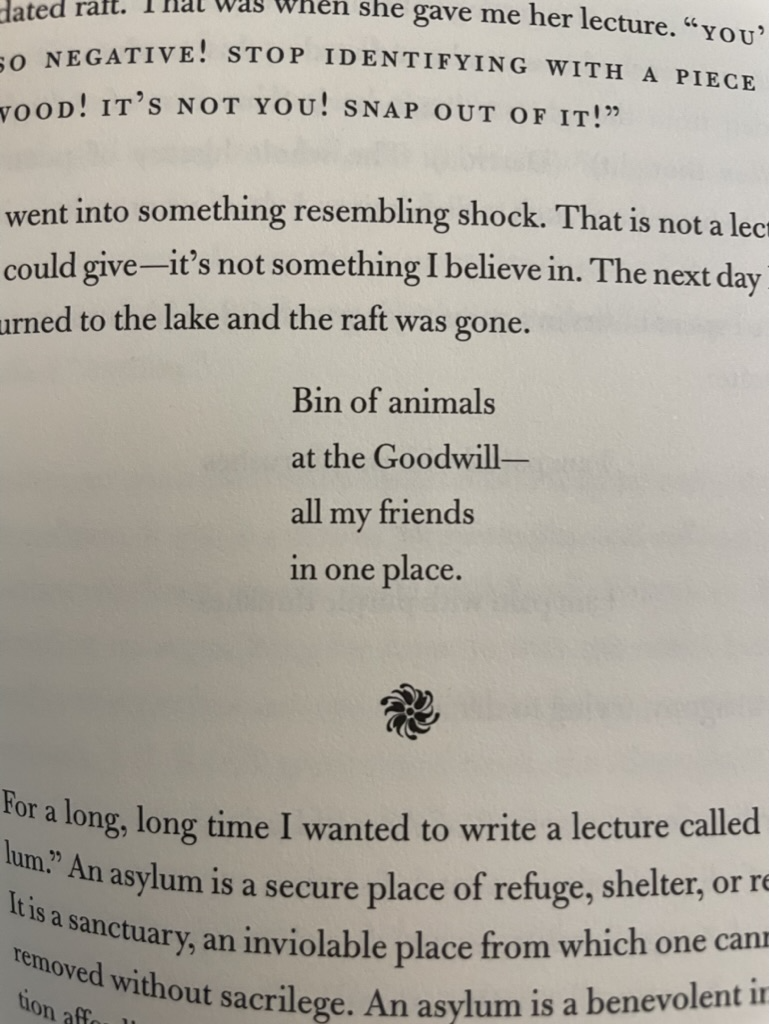
- an asylum is simultaneously a “secure place of refuge, shelter, or retreat [and]… sanctuary, an inviolable place from which one cannot be removed without sacrilege” and a “place of hopeless suffering and endless misunderstanding.”
-
Poetry is an asylum to me.
-
-
When your pencil is dull, sharpen it. And when your pencil is sharp, use it until it is dull again.
-
For me, there is no difference between writing and drawing. Both are uncanny miracles that result from the act of taking one thing- an implement, a tool- and touching it to another thing-anything that will serve as a surface and beholding a third thing born of that contact: a mark.