Toph Tucker and Jasmine Lee on Why Restaurant Websites Are Good and We’re All Going to Miss Them
Metadata
Highlights
- But my favorite restaurant websites, which will maybe speak to that spirit you are referring to, are restaurant websites in Japan where there’s this kind of rounded quality to them. Maybe I’m thinking of the font choice.
These websites are very generous, too—in terms of giving the history and the mission, and the ingredients that the restaurant chooses to use—in a way that you don’t really see in the U.S. In the U.S., they’re usually just parked to say, “we exist in the world. (View Highlight)
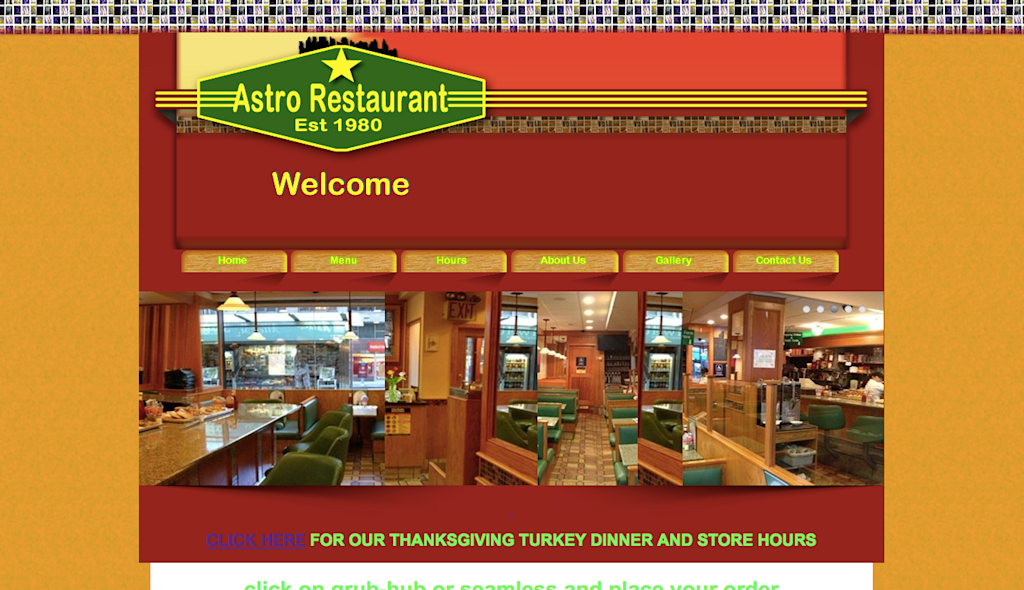
- In platforms that separate the content from the code, I’m lamenting the loss of expressive control for the typical person who makes a restaurant website today.
If there’s a story you want to tell or a vibe you want to convey, or an aesthetic, or some news, or a new development, or a new menu or something—any of that can be conveyed within a content container on Facebook, Instagram, Wordpress, Squarespace or another modern tool.
But when you do that, you forfeit a whole layer of choice in terms of how things relate to each other. Everything doesn’t just have to be a bunch of pages that have some number of tags. Maybe the menu items could be something other than just elements in a list (View Highlight)
title: “Toph Tucker and Jasmine Lee on Why Restaurant Websites Are Good and We’re All Going to Miss Them”
author: “Meg:”
url: ”https://www.are.na/blog/restaurant-websites”
date: 2023-12-19
source: reader
tags: media/articles
Toph Tucker and Jasmine Lee on Why Restaurant Websites Are Good and We’re All Going to Miss Them
Metadata
Highlights
- But my favorite restaurant websites, which will maybe speak to that spirit you are referring to, are restaurant websites in Japan where there’s this kind of rounded quality to them. Maybe I’m thinking of the font choice.
These websites are very generous, too—in terms of giving the history and the mission, and the ingredients that the restaurant chooses to use—in a way that you don’t really see in the U.S. In the U.S., they’re usually just parked to say, “we exist in the world. (View Highlight)
- In platforms that separate the content from the code, I’m lamenting the loss of expressive control for the typical person who makes a restaurant website today.
If there’s a story you want to tell or a vibe you want to convey, or an aesthetic, or some news, or a new development, or a new menu or something—any of that can be conveyed within a content container on Facebook, Instagram, Wordpress, Squarespace or another modern tool.
But when you do that, you forfeit a whole layer of choice in terms of how things relate to each other. Everything doesn’t just have to be a bunch of pages that have some number of tags. Maybe the menu items could be something other than just elements in a list (View Highlight)