No Good Alone
Metadata
Highlights
- Here’s the long and the short of it: I may have never felt the need to cut my friends out of my life in service of my own optimization, but I still don’t answer their texts. I can’t help but feel crushed by the weight of what I owe to my community, certain I’m going to hurt the people I’ve fooled into loving me, convinced that I’m doing them a favour by icing them out until I get my shit together. I am too loud, too self-involved, too insensitive, never caring enough or attentive enough or possessing enough natural kindness. I have made people I love feel alone when they needed me; I have been cruel to people I never wanted to hurt. Like many — dare I say, most — people in their early 20s, I find it hard to shake the feeling that my life is a pinball machine of relationships and opportunities that I’m hurtling through headfirst, knocking over bystanders and crashing into obstacles, unable to stop for long enough to figure out what I’m doing wrong. It is tempting, in this world of alarm-bells and flashing warning signs, to want to trap myself in a room where there’s nothing to bounce off of but myself. (View Highlight)
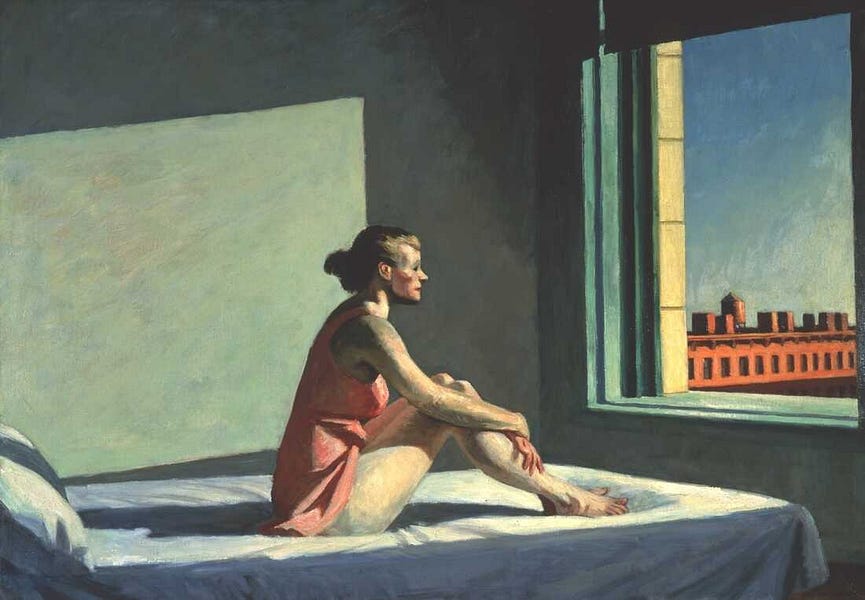
- You sit in your room and tell yourself lies: that they don’t want to hear from you anyway; that you’ll wait here alone writing Notes app soliloquies until you become good enough to deserve other people; that it is a noble endeavour to punish yourself.
And so I ignore my friends’ texts. My motivations tend to skew self-destructive rather than ruthlessly self-optimizing, but I’m beginning to suspect that there’s hardly any difference worth writing about. Doesn’t aspiring to construct a perfect self imply a desire to destroy the current one, anyway? (View Highlight)
- Relationships with other complex, flawed people are beautiful and transformative and fulfilling, but they’re also inherently maddening, infuriating, hurtful, stressful, and yes, triggering. It is ideal, of course, for us to work to understand those conflicts and thereby make them less destructive to ourselves and others, but we can’t make those feelings disappear; nothing real can have contact without friction. If you’ve been encouraged to define a healthy life as a frictionless one, I think it may be inevitable that a life devoid of contact starts to feel like healing. (View Highlight)
- I realized, though, that I was being a coward. Being alone is hard, to be sure, but it’s also deceptively easy — it requires nothing of us. (View Highlight)
- There is one way to reject this: make the choice to love someone who is as flawed as you are. One of the most remarkable pleasures that love has to offer, in fact, is the feeling of meeting someone who is scarred and beat-up and bruised, too emotional or not emotional enough or oscillating wildly between the two, and offering to love them enough to help them get better (and, of course, to have them do the same to you). To grow beside a friend or lover, knowing that you will poke and prod at each other as you take shape but unafraid of the resulting scar tissue — this is the good stuff. (View Highlight)
- Call me conspiratorial, but when I see the brightly-coloured Instagram posts encouraging me to cut off my friends and focus on myself, I can’t help but notice a convenient side effect of isolation: it forces us to rely on paid relationships in order to grow. The relationship between you and your therapist is transactional and safe, free of the messiness of attachment or stakes or love. (View Highlight)
- But to extrapolate that reality into the idea that we shouldn’t want to tend to our loved ones, to receive them as flawed and imperfect people and care for them anyway, is a grave miscorrection. We all exist to save each other. There is barely anything else worth living for. (View Highlight)
- The process of becoming yourself is not a corporate desk job, and it is not homework, and it is not an unticked box languishing on a to-do list. You do not have to treat your flaws like action items that must be systematically targeted and eliminated in order to receive a return on investment. You have no supervisor; you should not be punished when you fail. Your job is not to lock the doors and chisel at yourself like a marble statue in the darkness until you feel quantifiably worthy of the world outside. Your job, really, is to find people who love you for reasons you hardly understand, and to love them back, and to try as hard as you can to make it all easier for each other. (View Highlight)
title: “No Good Alone”
author: “rayne fisher-quann”
url: ”https://internetprincess.substack.com/p/no-good-alone”
date: 2023-12-19
source: reader
tags: media/articles
No Good Alone
Metadata
Highlights
- Here’s the long and the short of it: I may have never felt the need to cut my friends out of my life in service of my own optimization, but I still don’t answer their texts. I can’t help but feel crushed by the weight of what I owe to my community, certain I’m going to hurt the people I’ve fooled into loving me, convinced that I’m doing them a favour by icing them out until I get my shit together. I am too loud, too self-involved, too insensitive, never caring enough or attentive enough or possessing enough natural kindness. I have made people I love feel alone when they needed me; I have been cruel to people I never wanted to hurt. Like many — dare I say, most — people in their early 20s, I find it hard to shake the feeling that my life is a pinball machine of relationships and opportunities that I’m hurtling through headfirst, knocking over bystanders and crashing into obstacles, unable to stop for long enough to figure out what I’m doing wrong. It is tempting, in this world of alarm-bells and flashing warning signs, to want to trap myself in a room where there’s nothing to bounce off of but myself. (View Highlight)
- You sit in your room and tell yourself lies: that they don’t want to hear from you anyway; that you’ll wait here alone writing Notes app soliloquies until you become good enough to deserve other people; that it is a noble endeavour to punish yourself.
And so I ignore my friends’ texts. My motivations tend to skew self-destructive rather than ruthlessly self-optimizing, but I’m beginning to suspect that there’s hardly any difference worth writing about. Doesn’t aspiring to construct a perfect self imply a desire to destroy the current one, anyway? (View Highlight)
- Relationships with other complex, flawed people are beautiful and transformative and fulfilling, but they’re also inherently maddening, infuriating, hurtful, stressful, and yes, triggering. It is ideal, of course, for us to work to understand those conflicts and thereby make them less destructive to ourselves and others, but we can’t make those feelings disappear; nothing real can have contact without friction. If you’ve been encouraged to define a healthy life as a frictionless one, I think it may be inevitable that a life devoid of contact starts to feel like healing. (View Highlight)
- I realized, though, that I was being a coward. Being alone is hard, to be sure, but it’s also deceptively easy — it requires nothing of us. (View Highlight)
- There is one way to reject this: make the choice to love someone who is as flawed as you are. One of the most remarkable pleasures that love has to offer, in fact, is the feeling of meeting someone who is scarred and beat-up and bruised, too emotional or not emotional enough or oscillating wildly between the two, and offering to love them enough to help them get better (and, of course, to have them do the same to you). To grow beside a friend or lover, knowing that you will poke and prod at each other as you take shape but unafraid of the resulting scar tissue — this is the good stuff. (View Highlight)
- Call me conspiratorial, but when I see the brightly-coloured Instagram posts encouraging me to cut off my friends and focus on myself, I can’t help but notice a convenient side effect of isolation: it forces us to rely on paid relationships in order to grow. The relationship between you and your therapist is transactional and safe, free of the messiness of attachment or stakes or love. (View Highlight)
- But to extrapolate that reality into the idea that we shouldn’t want to tend to our loved ones, to receive them as flawed and imperfect people and care for them anyway, is a grave miscorrection. We all exist to save each other. There is barely anything else worth living for. (View Highlight)
- The process of becoming yourself is not a corporate desk job, and it is not homework, and it is not an unticked box languishing on a to-do list. You do not have to treat your flaws like action items that must be systematically targeted and eliminated in order to receive a return on investment. You have no supervisor; you should not be punished when you fail. Your job is not to lock the doors and chisel at yourself like a marble statue in the darkness until you feel quantifiably worthy of the world outside. Your job, really, is to find people who love you for reasons you hardly understand, and to love them back, and to try as hard as you can to make it all easier for each other. (View Highlight)